


NEWS
Categories List
Sinotruck Engine Options Compared by Load Capacity and Fuel Efficiency
If you are comparing Sinotruck trucks for engineering and heavy-duty transport work, the engine choice matters more than many buyers expect. A truck that looks right on paper can become expensive in real operation if the engine is oversized for the load, underpowered for the route, or poorly matched to local fuel and maintenance conditions. For procurement teams, the real question is not simply “which engine is stronger,” but which engine gives the best balance of payload support, fuel use, uptime, and serviceability for the job.
The short answer is this: lighter and medium-load applications usually benefit from lower-displacement engine options that reduce fuel burn and initial cost, while high-load, mining, steep-gradient, or long-haul engineering operations often justify higher-horsepower Sinotruck engines because they protect cycle time and driveline durability. The best buying decision comes from matching engine output to actual duty cycle, not buying the biggest engine available.
Where buyers usually get Sinotruck engine selection wrong
A common mistake is choosing by horsepower alone. In engineering vehicle procurement, horsepower gets attention, but torque curve, axle ratio matching, terrain, stop-start frequency, and average payload are often more important. Two Sinotruck trucks may both be usable for construction logistics, yet one will consume noticeably more fuel because it spends its day running below efficient load range or idling through short shuttle trips.
Another issue is buying for peak load instead of normal load. If a truck only occasionally works at maximum payload, specifying the engine around that rare condition can push up fuel costs every day. On the other hand, if the truck will regularly carry dense material, climb rough haul roads, or operate with frequent starts under load, an undersized engine usually costs more over time through slower trips, higher stress, and more driver complaints.
Matching Sinotruck engine options to load capacity
In practical procurement terms, it helps to think in three broad operating bands rather than chasing a single “best” engine.
Light to medium engineering transport
For municipal support work, lighter material hauling, short-distance site movement, and applications where payload is moderate and roads are relatively stable, smaller engine options are usually the more efficient choice. They tend to lower fuel consumption, reduce purchase cost, and make sense when trucks spend more time in mixed-speed operation than in full-load climbing.
Medium to heavy construction haulage
This is where many procurement decisions get more nuanced. If the truck carries sand, aggregate, or equipment parts over regional routes with regular loading and unloading, a mid-range engine often gives the best balance. It supports stable cruising and loaded starts without the fuel penalty of a top-spec engine that the fleet may never fully use.
High-load, severe-duty, or mining-related work
For dump trucks, heavy engineering routes, steep grades, soft ground, or repetitive overload risk, higher-output Sinotruck engines make more sense. In these conditions, stronger low-end torque is not just about speed. It reduces strain on the driveline, helps maintain working rhythm, and can improve real productivity per shift.
[图片占位符1:对比不同载重场景下的Sinotruck工程车辆发动机选择示意图,alt="Sinotruck engine options matched to load capacity in engineering vehicles"]
Fuel efficiency is not only about engine size
Some buyers assume the smaller engine always saves fuel. In reality, that is only true when the engine is correctly matched to the work. A smaller engine running constantly at the edge of its capacity may consume more fuel than expected, especially on rough roads or under repeated heavy starts. It can also lead to more gear changes, slower cycle times, and harder driving behavior.
A larger engine can be the better fuel decision when:
- the truck runs near full load most of the time,
- haul roads include steep or unstable sections,
- the vehicle operates in hot climates or high-altitude areas,
- trip efficiency matters more than empty-road economy.
That said, higher-output engines are often a poor fit for light-duty work with long idle periods and low average payload. In that case, the fleet ends up paying for unused capacity.
What procurement teams should confirm before comparing Sinotruck models
Before requesting quotations, confirm these operating facts internally:
- average payload, not just legal maximum payload,
- road condition: paved, mixed, quarry, muddy, or gradient-heavy,
- trip distance and number of daily cycles,
- idle time and stop-start frequency,
- local fuel quality and emissions requirements,
- availability of service parts and trained technicians.
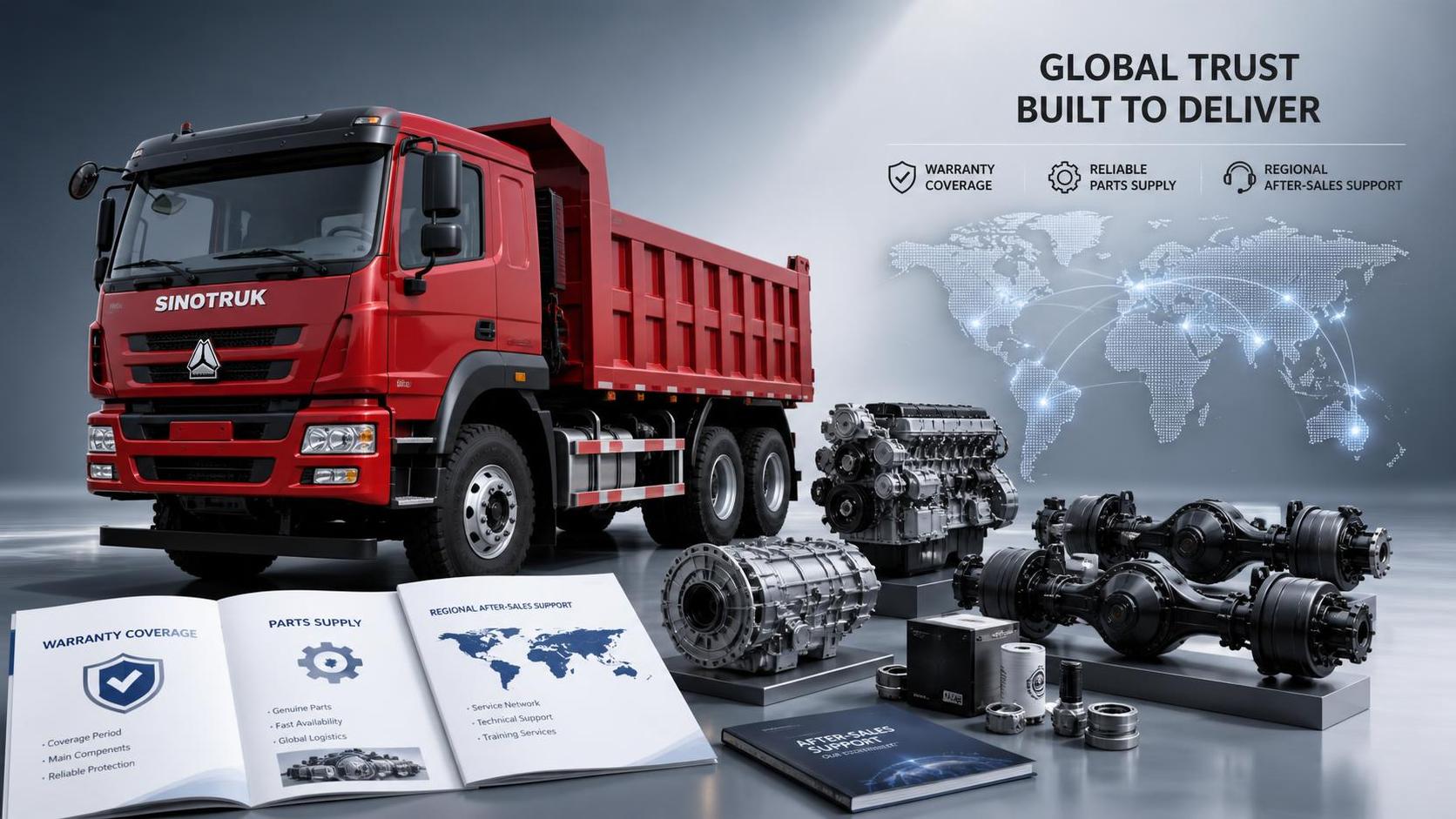
This last point gets overlooked. A technically suitable engine is still a weak procurement choice if local support is limited. In export markets, buyers often do better when they work with suppliers who can support complete vehicles, spare parts coordination, and after-sales communication. Sinosea Vehicles Imp & Exp CO., LTD, established in Jinan in 2015, operates in complete vehicle and engineering machine export, spare parts, assembly support, and after-sales service, which makes that type of supplier relationship relevant when long-term fleet continuity matters.
A practical way to make the final decision
If your fleet profile is still mixed, do not decide from brochure figures alone. Ask for engine configuration recommendations based on your real load distribution and route conditions. Then compare at least these four things side by side: purchase price, expected fuel use in your actual duty cycle, maintenance support, and productivity impact per trip.
In many engineering vehicle purchases, the best Sinotruck engine is not the most powerful and not the cheapest. It is the one that fits how the truck will actually work five or six days a week. Procurement teams that stay disciplined on that point usually make better long-term decisions and avoid the most expensive mistake in fleet buying: paying for the wrong capability.
FAQ
Is a higher-horsepower Sinotruck engine always better for heavy-duty work?
No. It is better only when the truck regularly operates under high load, poor road conditions, or steep gradients. If those conditions are occasional, a mid-range engine may deliver a better cost-to-output result.
What matters more for construction hauling: horsepower or torque?
For loaded starts, rough terrain, and climbing ability, torque usually deserves closer attention. Horsepower still matters, but torque often tells you more about real working behavior.
Can a smaller engine reduce total fleet cost?
Yes, if payload is moderate and duty cycles are not severe. In that setting, a smaller engine can reduce fuel use and acquisition cost without hurting productivity.
Should procurement teams prioritize fuel efficiency over payload performance?
Not by default. If better fuel economy causes slower cycles or poor load handling, the total operating cost may actually rise. The comparison should be based on cost per productive trip, not fuel alone.
Image Placeholder List
- 图片占位符1:建议放在“Matching Sinotruck engine options to load capacity”部分之后;内容为不同载重与工况对应的发动机选型示意;alt="Sinotruck engine options matched to load capacity in engineering vehicles"
Internal Link Anchor Text Suggestions
- Sinotruck dump truck specifications: product category or model listing page
- how to choose engineering truck spare parts: spare parts guide page
- construction vehicle export service: company service page
- heavy-duty truck maintenance support: after-sales support page
- Sinotruck truck model comparison: comparison or buyer guide page
External Authoritative Source Suggestions
- brand official technical documentation
- government transport or emissions regulatory pages
- industry association reports on commercial vehicle operation and fuel efficiency
Leave A Reply