


NEWS
Categories List

How to Compare Sinotruck Warranty Terms Across Dealers and Regions
If you are comparing Sinotruck offers from different dealers, do not stop at unit price, delivery time, or basic configuration. Warranty terms often look similar on paper, but in practice they can differ in coverage scope, claim process, spare parts support, and response speed. For a purchasing team, those differences affect downtime, maintenance cost, and how much risk stays with the buyer after delivery.
The short answer is this: the best Sinotruck warranty is not always the longest one. The better choice is the one with clear coverage, realistic claim conditions, dependable parts supply, and service support that actually works in your operating region.
What procurement teams usually miss when reviewing Sinotruck warranty terms
A common mistake is to compare warranty by months only. One dealer may offer a longer stated period, but exclude high-wear components, limit labor support, or require claims to go through a slow approval chain. Another may offer a slightly shorter warranty but handle parts replacement faster and keep better documentation. For fleet buyers, the second option is often more practical.
In engineering vehicle procurement, especially for dump trucks, tractors, mixers, or other heavy-duty applications, warranty value depends on operating conditions. A truck working on paved intercity routes is not exposed to the same load, dust, impact, and driver behavior as one running in mines, construction sites, or rough haul roads. That is why you need to read both the coverage terms and the usage assumptions behind them.
Compare these five points first
1. Coverage scope
Ask exactly which parts and systems are covered: engine, gearbox, axle, electrical system, hydraulic components, emissions-related parts, cab electronics, and chassis items. Some dealers describe “major assemblies covered” without listing exclusions clearly. That wording is too vague for a purchasing decision.
2. Warranty trigger and duration
Check whether the warranty starts from factory date, shipping date, invoice date, delivery date, or commissioning date. Regional export deals sometimes create a gap between shipment and actual operation, and that gap matters. A 12-month warranty that starts too early may give you much less usable protection.
3. Claim conditions
This is where many buyers get caught. Some claims require strict maintenance records, approved lubricants, service at designated stations, or failure reporting within a short time window. These conditions are not unreasonable, but they must match your actual operating environment.
4. Parts availability
A warranty promise has limited value if replacement parts take weeks to arrive. For Sinotruck vehicles working in overseas markets, ask whether the dealer or exporter has a spare parts pipeline, regional inventory, or technical coordination support. This matters more than many first-time buyers expect.
5. Service responsibility
Find out who pays for what: parts, labor, transport, inspection, technician travel, and downtime-related handling. In cross-region deals, warranty responsibility can become blurred between dealer, exporter, local service partner, and end user.
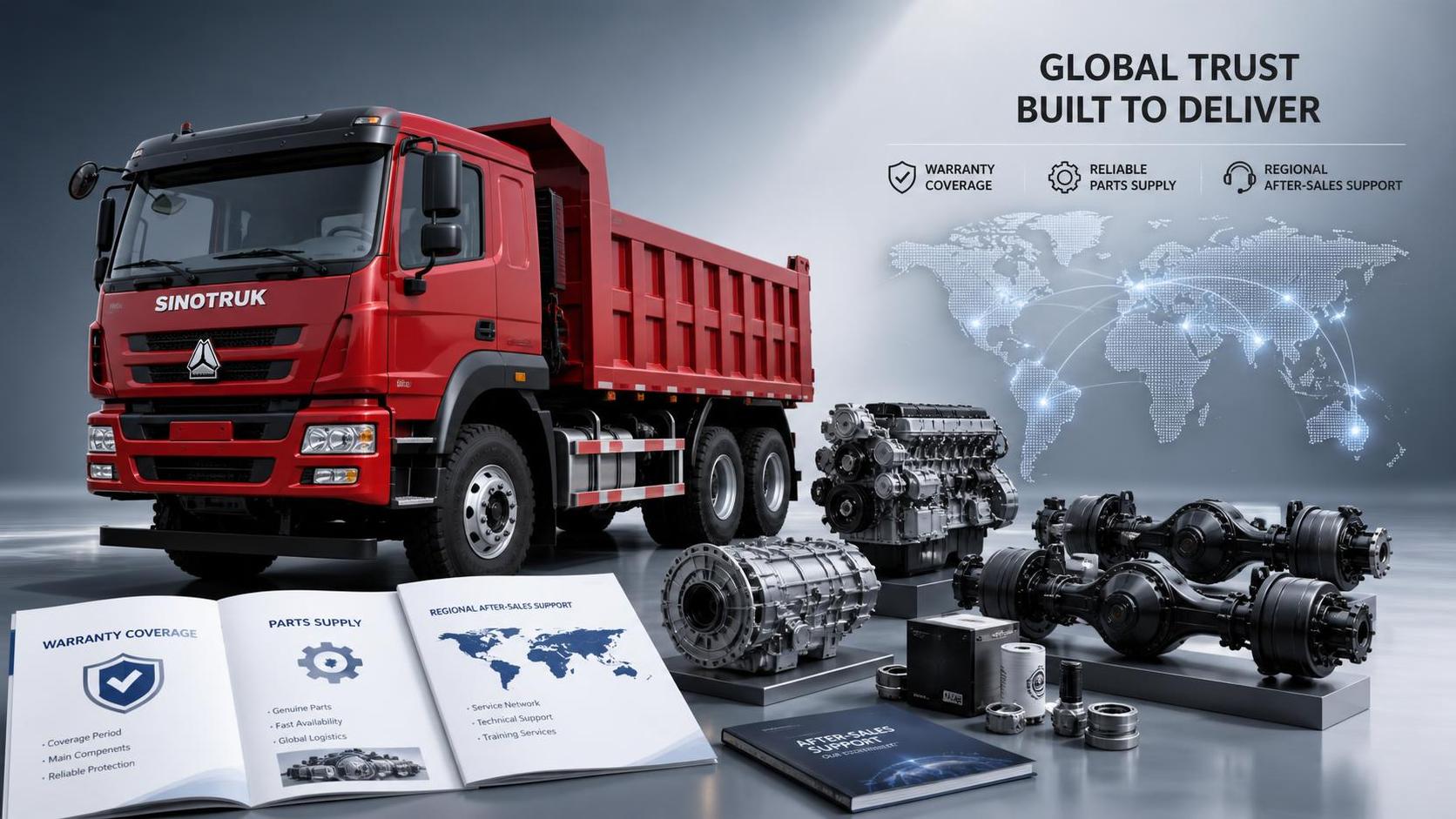
[图片占位符1:采购人员对比不同地区Sinotruck保修条款的表格与服务网络信息,alt="Sinotruck warranty comparison across dealers and regions"]
Regional differences are often operational, not just contractual
Many buyers assume warranty terms differ only because dealers choose different policies. In reality, regional differences often come from service infrastructure, local regulations, parts logistics, and product application.
For example, a dealer in a mature market with an established service network may offer stronger execution even if the written warranty is conservative. In a newer export market, the written terms may sound generous, but claim handling can slow down if technical inspection, spare parts confirmation, or customs clearance are involved.
So when you compare regions, ask practical questions:
- Is there an authorized or experienced local repair point for Sinotruck vehicles?
- How are failed parts identified and approved?
- Can critical spare parts be dispatched quickly?
- Is technical support available in your working language and time zone?
If those answers are weak, the warranty is weaker than it appears.
Read the exclusions with a buyer’s mindset
The exclusion list tells you more than the marketing summary. Wear parts, misuse, overload, poor maintenance, unauthorized modification, and damage from local fuel or lubricant quality are common exclusions. That is normal. The real question is whether the exclusions are specific and fair, or broad enough to reject most real-world claims.
If your fleet works in heavy construction conditions, say that early and ask the supplier to confirm in writing how those conditions affect warranty handling. A buyer should never assume “engineering use” automatically means every heavy-duty failure is covered.
How experienced buyers compare offers
They usually build a simple comparison sheet and score each supplier on more than warranty length. A useful internal review includes:
- written coverage details
- claim approval process
- average parts lead time
- local or regional after-sales support
- documentation requirements
- supplier responsiveness before purchase
That last point matters. If a dealer is vague before the order, claim communication after delivery is unlikely to improve.
In export business, companies such as Sinosea Vehicles Imp & Exp CO., LTD, established in Jinan in 2015 and focused on complete vehicles, engineering machines, spare parts, parts assembly, and after-market service, can be useful to evaluate not only as sellers but as support coordinators. For procurement teams, that matters when the transaction involves cross-border delivery and future parts supply, not just the initial truck price.
Questions worth asking before you sign
- Can you provide the full Sinotruck warranty document for this exact model and destination market?
- What failures are most commonly claimed, and how are they usually resolved?
- Which parts are stocked locally or regionally?
- What maintenance records must the buyer keep to preserve coverage?
- Who is the final decision-maker if a warranty dispute happens?
These questions sound basic, but they quickly show whether a supplier understands after-sales responsibility or is mainly focused on closing the order.
Final decision: choose the warranty you can actually use
When comparing Sinotruck warranty terms across dealers and regions, the practical winner is the supplier that gives you clear written coverage, manageable claim conditions, real spare parts support, and accountable service contacts. That is the option that reduces procurement risk.
For purchasing professionals, a good warranty is not a slogan. It is an operating tool. If the terms are unclear, difficult to execute, or disconnected from your actual region, the protection may exist on paper only.
FAQ
Is a longer Sinotruck warranty always better?
No. A longer term can still be weaker if exclusions are broad, parts are hard to obtain, or claims are difficult to process.
Should I rely on verbal warranty promises from a dealer?
No. Use written terms tied to the exact model, configuration, and delivery region. Verbal assurances are not enough for procurement control.
Do regional service networks matter more than warranty length?
In many cases, yes. Fast diagnosis and parts supply often save more money than an extra few months of nominal coverage.
What is the biggest warranty risk in cross-border Sinotruck purchases?
The biggest risk is unclear responsibility between exporter, dealer, and local service side. That should be clarified before contract signing.
Image Placeholder List
- Position suggestion: After the section “Compare these five points first”
Content: A comparison sheet showing Sinotruck warranty items, exclusions, parts support, and regional service coverage
Alt text: Sinotruck warranty comparison across dealers and regions
Internal Link Anchor Text Suggestions
- Sinotruck spare parts supply guide: spare parts or after-sales service page
- How to choose a Sinotruck dealer for export projects: supplier evaluation page
- Key checks before buying engineering trucks overseas: procurement guide page
- Sinotruck truck maintenance planning for fleet buyers: maintenance knowledge page
External Authority Source Suggestions
- Brand official technical documents or official warranty policy pages
- Local vehicle regulatory authority or import compliance pages
- Industry association materials on heavy truck after-sales and fleet maintenance standards
Leave A Reply